A boiler that stops working always seems to choose the coldest morning of the year. The good news is that plenty of call-outs turn out to be something simple: low pressure, a thermostat that has been knocked, a timer that reset after a power cut or a condensate pipe that has frozen overnight.
The eight checks below are all safe for a homeowner to carry out and can save you waiting for an engineer. None of them involve taking the cover off the boiler. Anything inside the casing of a gas boiler should only ever be handled by a Gas Safe registered engineer.
Safety first: if you can smell gas or your carbon monoxide alarm is sounding, stop here. Turn the gas off at the meter if you can do so safely, open doors and windows, do not use light switches or anything that could cause a spark, leave the property and call the National Gas Emergency Service free on 0800 111 999.
1. Check the Boiler Has Power
Look at the boiler’s display or power light. If it is completely blank, check the fused switch next to the boiler is on and look at your consumer unit for a tripped circuit breaker. A short power cut can also switch some boilers off or reset their clocks.
If a breaker trips again as soon as you reset it, leave it off. That points to an electrical fault in the boiler or its wiring, which needs an engineer. We handle boiler electrical and wiring faults as well as gas repairs.
2. Check the Thermostat and Timer
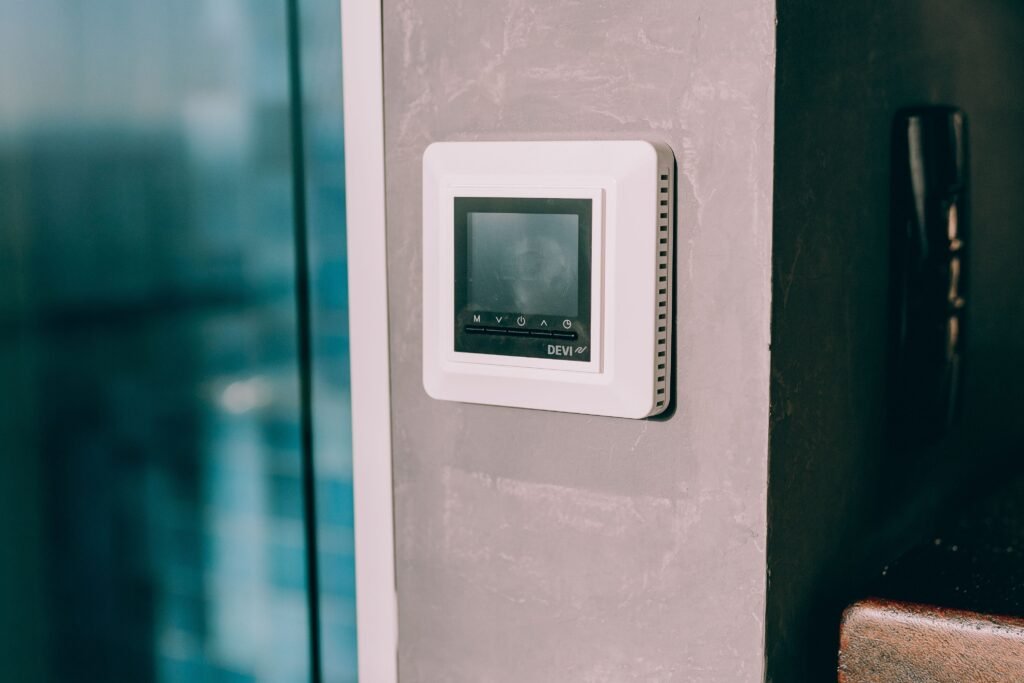
If the boiler has power but the heating will not come on, the boiler may simply not be getting a call for heat. Turn the room thermostat a few degrees above the current room temperature and listen for the boiler firing up.
- Replace the batteries in a wireless thermostat or receiver
- Check the programmer is set to the right time and the heating channel is switched on, especially after a power cut or when the clocks change
- For smart controls, check the app is connected and has not been left in holiday or away mode
- Make sure the heating dial on the boiler itself has not been turned right down
3. Check the Boiler Pressure
Most modern combi and system boilers have a pressure gauge on the front. On many systems it should read somewhere around 1 to 1.5 bar when the heating is cold, although your boiler manual gives the correct figure. If it has dropped below 1 bar, many boilers will lock out to protect themselves.
You can usually top the pressure back up yourself using the filling loop, following the manufacturer’s instructions. If it keeps dropping, there is an underlying fault such as a leak or a failing expansion vessel. Our guide on why a boiler keeps losing pressure walks through the common causes.
4. Check the Gas Supply
If you have a gas hob, try lighting it. If the hob will not light either, the problem is with the supply rather than the boiler.
- On a prepayment meter, check you have credit and that the emergency credit has not run out
- Check the handle on the gas meter is in line with the pipe, which means it is open
- If you have no gas at all and you have not been told of work in the area, contact your gas supplier
Do not attempt anything beyond these checks on the gas meter or pipework.
5. Look for a Frozen Condensate Pipe
Modern condensing boilers produce water as they run, which drains away through a plastic condensate pipe, usually running outside to a drain. In freezing weather that pipe can freeze, the water backs up and the boiler shuts down. You may hear a gurgling noise from the boiler and see a fault code on the display.
If the pipe runs outside and the weather is below freezing, pour warm water (not boiling water) slowly along the outside section of pipe, or hold a hot water bottle against it, until it thaws. Then reset the boiler following the manual. Which? has a clear guide to thawing a condensate pipe safely. If it freezes every winter, an engineer can insulate it, increase its size or reroute it so it is less exposed.
6. Read the Fault Code
Most boilers made in the last fifteen years or so show a fault code when they lock out. Write it down, along with the make and model, which you will usually find on the front of the boiler or on a label underneath. The manual or the manufacturer’s website will tell you what the code means and whether it is something you can safely reset.
Even when it is not something you can fix, giving the engineer the code helps them arrive with the right parts and often gets the boiler working again on the first visit.
7. Reset the Boiler (Once or Twice Only)
Many lockouts can be cleared with the reset button. Follow the instructions in your manual, then give the boiler a few minutes to go through its start-up sequence.
If it locks out again straight away, stop there. Resetting it over and over will not fix a fault, and with some faults it can make things worse. A boiler that keeps locking out needs to be looked at by an engineer.
8. Bleed Radiators That Are Cold at the Top
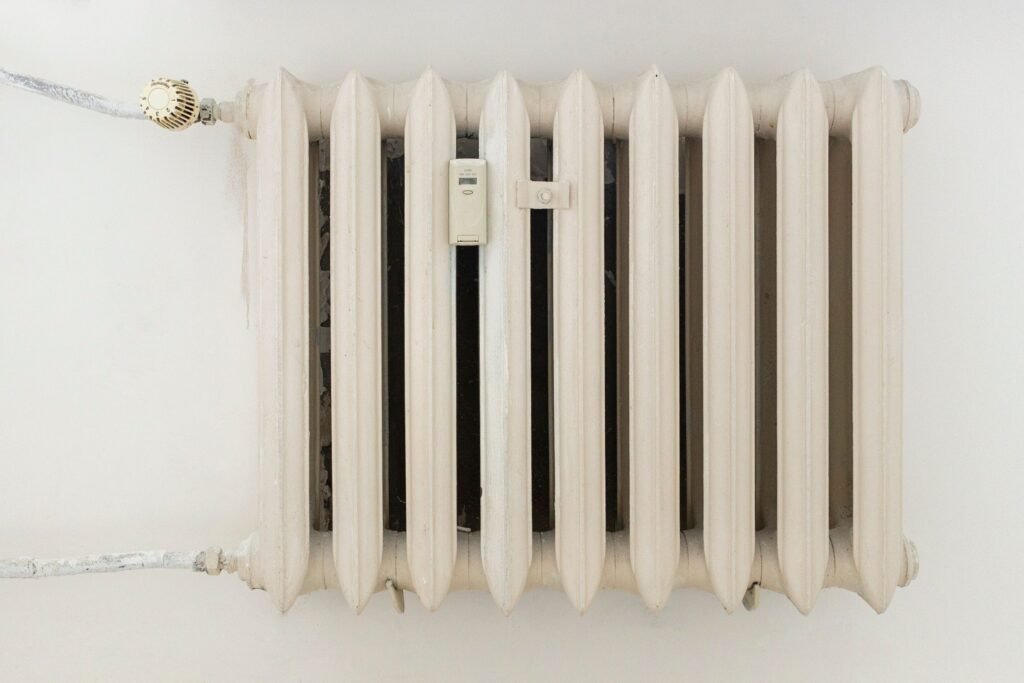
If the boiler is firing but some radiators stay cold at the top, trapped air is the most likely cause. Turn the heating off, let the radiators cool, then use a radiator key to open the bleed valve until water appears. Check the boiler pressure afterwards, because bleeding lets a little water out of the system.
Radiators that are warm at the top and cold at the bottom usually have a build-up of sludge, which bleeding will not fix. A power flush or system clean may be needed.
Hot Water but No Heating, or Heating but No Hot Water?
When only one side of the system has stopped, the fault is usually in a specific part rather than the whole boiler.
- Combi boiler with hot water but no heating: often the controls, the pump or the diverter valve, which switches the boiler between heating and hot water
- Combi boiler with heating but no hot water: commonly the diverter valve or the flow sensor
- System or regular boiler with no hot water: check the hot water channel on the programmer and the cylinder thermostat, then the motorised zone valves
Once you have checked the controls, these faults need an engineer to test and replace parts.
When to Call a Gas Safe Engineer
Call a qualified heating engineer if:
- The boiler still is not working after the checks above
- It keeps locking out or showing the same fault code
- Water is leaking from the boiler or the pipework underneath it
- The boiler is making loud banging, whistling or kettling noises
- You notice sooty marks around the boiler or, on an older appliance, a lazy yellow or orange flame instead of a crisp blue one
- A circuit breaker trips when the boiler tries to start
- You are not sure what is wrong or do not feel comfortable checking
Sooty marks, a yellow flame or a carbon monoxide alarm are warning signs of unsafe combustion. Switch the boiler off, ventilate the room and get it checked before using it again.
If there are elderly people, young children or anyone unwell in the house, losing heating in winter should be treated as urgent. Our emergency boiler repair line is answered 24 hours a day.
Frequently Asked Questions
Why Is My Boiler Not Turning On?
The most common reasons are no power to the boiler, low system pressure, a thermostat or timer that is not calling for heat, an interrupted gas supply or a frozen condensate pipe. Work through the checks above in order before booking a repair.
Why Does My Boiler Stop Working When It Is Cold?
A frozen condensate pipe is the usual culprit during a cold snap. Systems that are already losing pressure or have a weak part also tend to fail when the heating runs for longer each day, which is why an annual boiler service before winter is worth having.
Is It Safe to Keep Resetting My Boiler?
Resetting once or twice is fine. If the boiler keeps locking out, something is causing it to shut down for safety and it needs to be diagnosed rather than reset again.
Should I Repair or Replace My Boiler?
Most faults are worth repairing. If your boiler is older, breaking down regularly or parts are getting hard to find, replacement may make more sense. Our guide on how long a boiler lasts covers the signs to look for.
Boiler Still Not Working? We Can Help
HEAT Gap is a family-run, Gas Safe registered heating business in St Albans with more than 15 years of experience. If the checks have not solved it, our engineers can diagnose the fault and give you a fixed price for the boiler repair before any work starts. You can see everything we cover on our heating services page.
Request a free quote or call 07507 554236. For a breakdown out of hours, we answer emergency calls 24/7.