Most modern gas boilers last around 10 to 15 years. A well-installed boiler that is serviced every year and runs on a clean, well-protected system can keep going for longer, while one that is neglected or badly sized can start failing well before its tenth birthday.
Age on its own is not a reason to replace a boiler that is safe and working well. What matters more is how reliable it is, how efficiently it runs and whether it can still be repaired sensibly. This guide covers what shortens a boiler’s life, the signs it is nearing the end and how to decide between a repair and a replacement.
How Long Do Boilers Last on Average?
Engineers and manufacturers generally work on a lifespan of 10 to 15 years for a modern condensing gas boiler. That applies whether you have a combi, a system boiler or a regular boiler with a tank in the loft. The type matters less than how the boiler was installed and looked after. If you are weighing up which type suits your home, our guide to combi vs system boilers explains the differences.
Manufacturer warranties vary in length between brands and models. Most depend on the boiler being registered after installation and serviced every year by a Gas Safe registered engineer, so keep your service records.
What Affects How Long a Boiler Lasts?
Annual Servicing
A yearly service is the single biggest thing you can do to extend a boiler’s life. The engineer cleans and checks the parts that wear, spots small problems before they become breakdowns and confirms the boiler is burning gas safely. Our guide on how often to service your boiler covers what is involved.
Water Quality and Limescale
St Albans and most of Hertfordshire have hard water. Over time, limescale builds up inside the boiler’s heat exchanger, particularly in combi boilers that heat mains water directly. Scale makes the boiler work harder, can cause noisy kettling and eventually leads to failures. A scale reducer on the incoming water, or a water softener, helps protect it.
Sludge in the Heating System
Older radiators and pipework gradually release rust and debris, which collect as black sludge. Sludge blocks the heat exchanger and wears out the pump and valves. A magnetic system filter and the right level of corrosion inhibitor make a real difference, and a power flush can clean out a badly affected system.
Installation and Sizing
A boiler that is too powerful for the home tends to switch on and off constantly, known as short cycling, which wears parts faster and wastes gas. Poor installation, such as an undersized gas pipe or a badly run condensate pipe, also leads to early problems.
Repeated Pressure Loss
Topping up the pressure every few weeks brings fresh, oxygen-rich water into the system, which speeds up corrosion inside. If you are regularly using the filling loop, find out why the boiler is losing pressure and fix the cause.
Signs Your Boiler Needs Replacing
One of these on its own does not always mean a new boiler. Several together usually do.
- It is over 10 to 15 years old and breaking down more often. Occasional repairs are normal. Regular call-outs every winter are a sign the boiler is wearing out.
- Parts are hard to get. Once a model has been out of production for a long time, some parts become scarce or are discontinued, which means longer waits and more expensive repairs.
- Your energy bills keep rising. An ageing boiler loses efficiency, and very old non-condensing boilers waste far more gas than a modern condensing model.
- The house takes longer to warm up. Slow heating and lukewarm radiators can point to a failing boiler, although sludge or a pump fault can cause the same symptoms.
- It leaks from inside the casing. Water from inside the boiler often means a corroded heat exchanger or failed seals, which can be costly to repair on an older model.
- It is noisy. Persistent banging, gurgling or kettling, even after the system has been cleaned, often means scale or sludge has done lasting damage.
- An engineer has classed it as At Risk or Immediately Dangerous. If repairing it is not practical, replacement is the safe option.
Warning signs of unsafe combustion: sooty marks around the boiler, a lazy yellow or orange flame on an older boiler, or a carbon monoxide alarm sounding. Switch the boiler off, open windows and have it checked by a Gas Safe engineer before using it again. If you smell gas, call the National Gas Emergency Service on 0800 111 999.
Should You Repair or Replace Your Boiler?
There is no fixed rule, but these are the questions a good engineer will help you answer honestly.
| Repair is usually the better choice when | Replacement is usually worth considering when |
|---|---|
| The boiler is under 10 years old | The boiler is over 10 to 15 years old |
| It is a one-off fault with a reasonably priced part | It has needed several repairs in the last year or two |
| Parts are easy to get | Parts are discontinued or hard to find |
| It is still efficient and heats the home well | Bills are rising and the home is slow to heat up |
| The repair cost is small compared with a new boiler | A major part such as the heat exchanger has failed |
If you are not sure, ask for a repair price and a replacement quote at the same time so you can compare them properly. If your boiler is not working right now, our checklist for a boiler that is not working covers the safe checks to try first.
What to Expect When You Replace a Boiler
A proper boiler replacement starts with a survey of your home, your hot water use and your existing system, so the new boiler is the right type and size rather than simply a like-for-like swap.
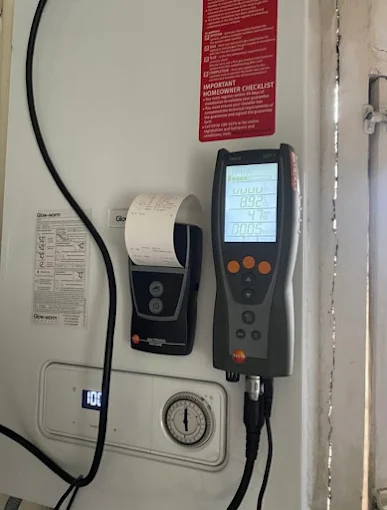
Any new gas boiler fitted in England has to meet Building Regulations. In practice that means:
- The boiler must be a high-efficiency condensing model
- Under the government’s Boiler Plus standards, gas boilers need an ErP efficiency of at least 92% and time and temperature controls
- New combi boilers also need an extra energy-saving measure, such as weather compensation, load compensation, smart controls with automation and optimisation, or flue gas heat recovery
- The heating system should be cleaned and treated with inhibitor to protect the new boiler
- The installer must be Gas Safe registered and notify the installation so you receive a Building Regulations compliance certificate
A straightforward swap in the same position is often finished in a day. Changing boiler type, for example from a regular boiler to a combi, or moving it to a new location usually takes longer.
Is It Still Worth Fitting a Gas Boiler?
For most existing homes, yes. There is currently no ban on replacing a gas boiler in an existing property. The Future Homes Standard, which will stop gas boilers being fitted in newly built homes, applies to new construction only, as Heat Geek explains.
That said, a replacement is a good moment to consider the alternatives. A heat pump can suit well-insulated homes, and government grants are available through the Boiler Upgrade Scheme. If you have no mains gas, an electric boiler may be the simpler option.
How to Help Your Next Boiler Last Longer
- Have it serviced every year and keep the paperwork for the warranty
- Fit a magnetic filter and keep the inhibitor topped up
- Protect it from limescale with a scale reducer or water softener
- Keep an eye on the pressure gauge and fix leaks early
- Insulate the condensate pipe where it runs outside
- Use your controls sensibly rather than switching the heating on and off at full blast
Frequently Asked Questions
Can a Boiler Last 20 Years?
Some do, especially simpler older models that have been well maintained. A 20-year-old boiler is likely to be far less efficient than a modern one, however, and parts can be difficult to source.
Is It Worth Servicing an Old Boiler?
Yes. As long as you are using it, an annual service is the best way to make sure it is still burning gas safely and to catch faults before they leave you without heating.
Do I Need to Replace My Radiators With a New Boiler?
Not usually. Most radiators and pipework can stay, provided the system is cleaned properly. Your engineer will tell you if any radiators are leaking, badly corroded or too small for the room.
Thinking About a New Boiler in St Albans?
HEAT Gap is a family-run, Gas Safe registered heating business based in St Albans. Boiler installation, repair and servicing make up most of our work, and we will give you straight advice on whether a repair or a replacement makes more sense. Every quote is fixed and agreed before work starts, and all our work is guaranteed.
Find out more about our boiler installation service and the wider range of heating services we offer, then request a free quote or call 07507 554236.